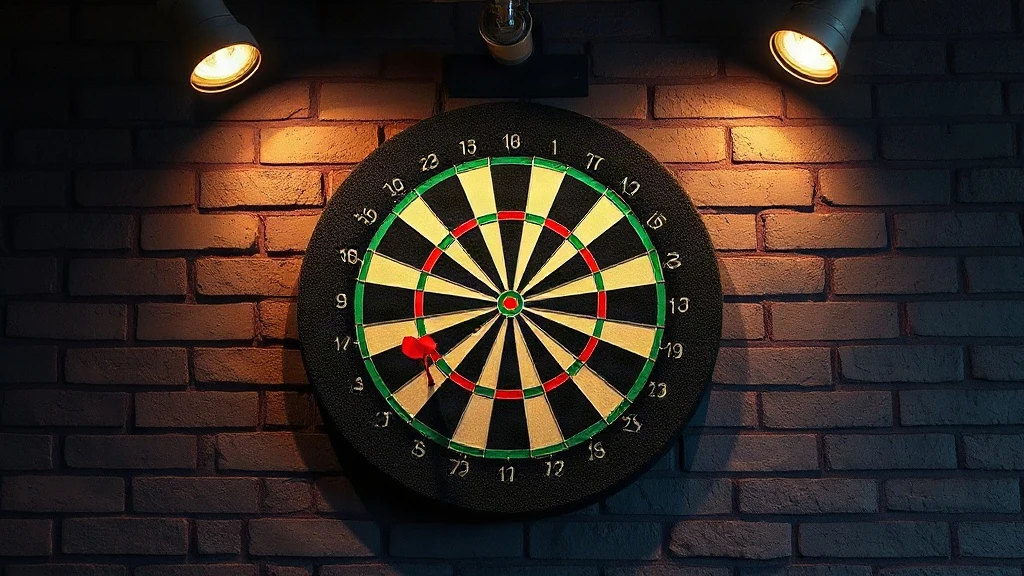
Dart Board Explained: Standard Size, Height, and Setup
Learn how to choose and set up a dart board: standard sizes, mounting height, throw line distance, scoring rules, and maintenance tips. Updated for 2026.
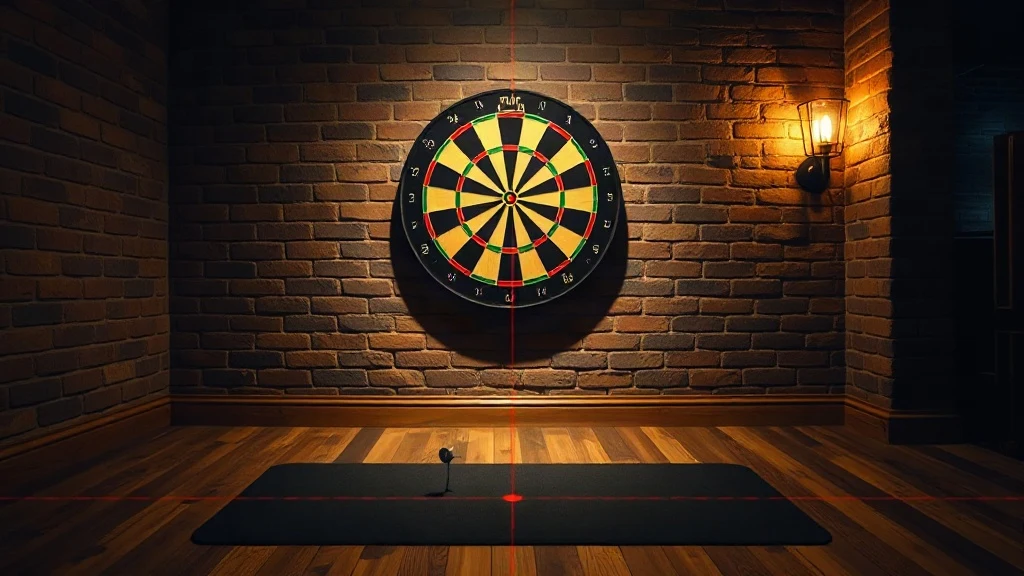
Dart board is a circular target used in darts, made of compressed sisal fibers, with numbered segments from 1 to 20 and a bullseye at the center. A standard board is 451 mm in diameter, hangs with the bullseye 1.73 meters above the floor, and is played from a throw line 2.37 meters away.
- Official tournament boards use bristle sisal, which self-heals after darts are removed.
- The standard height and distance are the same for every board, from home setups to the World Darts Championship 2026.
- Electronic boards score automatically but use a smaller target area than bristle boards.
Updated 2026.
Darts is one of the few sports where the equipment at home matches the equipment on television. The dart board used in local leagues, pub tournaments, and the PDC World Darts Championship follows the same dimensions. When you understand those dimensions, buying, hanging, and playing on your own board becomes simple.
This guide covers the standard size, mounting height, throw line distance, scoring basics, and care tips for a dart board. You will also see how bristle, electronic, and magnetic boards compare.
What Is a Dart Board Made Of?
A modern dart board is made of compressed sisal fibers, often called bristle. The fibers are packed tightly and bound to a backing, which lets the board absorb steel-tip darts and then close back around the holes.
That self-healing quality is why bristle boards are the standard for professional darts. Cheaper boards made from cork, paper, or plastic do not recover as well and show wear quickly. The number ring on a bristle board can be rotated to spread wear across the playing surface.
How Big Is a Standard Dart Board?
The standard dart board is 451 mm, or 17.76 inches, in diameter. This measurement comes from the World Darts Federation equipment standards and is used across major tournaments.
The face is divided into 20 numbered wedges, plus a double ring, a treble ring, and a bullseye. When you hear players talk about hitting a treble 20, they mean the thin red and green ring between the outer double ring and the bullseye.
For comparison, a magnetic board for children can be smaller, while electronic boards often keep the same outer diameter but use a slightly thinner playing surface. Always check the product details if tournament-style practice is your goal.
Source: PDC official playing rules and standard darts dimensions.
How High Should a Dart Board Be Mounted?
Mount the board so the center of the bullseye sits 1.73 meters, or 5 feet 8 inches, above the floor. This height is measured from the floor to the exact middle of the bullseye, not from the top of the board.
“The centre of the bullseye shall be 1.73 m above the floor and the throw line shall be 2.37 m from the face of the board,” reads the PDC’s official playing rules.
Use a tape measure and a level when hanging the board. A small error in height can change how the darts land, especially on doubles and trebles. If you mount the board on a wall, add a backboard or surround to protect the surface from stray darts.
How Far Do You Stand From a Dart Board?
Stand 2.37 meters, or 7 feet 9.25 inches, away from the face of the board. The throwing line is called the oche, and your front foot must stay behind it when you release each dart.
In home setups, many players use tape, a piece of wood, or a rubber mat to mark the line. The distance is measured horizontally from the face of the board, not from the wall behind it. A thick board mount can change the measurement slightly, so measure from the front of the board.
How Do You Score on a Dart Board?
Each player throws three darts per turn, and the score is calculated from the segment where each dart lands. The outer ring is the double ring, the inner ring is the treble ring, and the two center circles are the bullseye.
- A dart in a numbered wedge scores that number.
- A dart in the double ring scores double the number.
- A dart in the treble ring scores triple the number.
- The outer bull scores 25 points, and the inner bull scores 50.
Games such as 501 start at 501 and players subtract their scores until they reach exactly zero, finishing on a double or the bullseye. The board layout never changes, so the same scoring rules work for every standard dart board.
Bristle vs Electronic vs Magnetic Dart Boards
The best dart board for you depends on who plays and where you play. Bristle boards suit serious practice, electronic boards suit casual family play, and magnetic boards suit children and low-noise spaces.
| Type | Best for | Pros | Cons |
|---|---|---|---|
| Bristle | Serious players and home practice | Official tournament feel, self-healing surface, works with steel-tip darts | Needs rotation, can be damaged by soft-tip darts |
| Electronic | Family games and automatic scoring | Built-in games, sound effects, no bounce-outs | Uses plastic-tip darts, smaller target area, needs power |
| Magnetic | Children and quiet spaces | Safe, quiet, no sharp points | Not a real darts feel, magnets can lose strength |
If you plan to join a league or practice for tournament play, choose a bristle board. If you want a casual game night experience, an electronic board can be more fun and easier to score.
How to Care for a Dart Board
Rotate the number ring regularly so the dart board wears evenly. Most bristle boards include a rotation chart, and a typical suggestion is to rotate the ring every few weeks depending on how often you play.
Pull darts straight out instead of twisting them, and avoid leaving darts in the board when it is not in use. Keep the board away from damp areas, since moisture can soften the sisal and reduce the self-healing effect. A protective surround also catches stray darts and extends the life of both the wall and the board.
For more help, see our dart surround board guide.
What Is the Best Way to Choose a Dart Board?
Choose a bristle dart board if you want an authentic feel, an electronic board for automatic scoring, and a magnetic board for young children. Your budget, space, and playing level all matter, but the standard size and setup stay the same.
Look for a board with a rotatable number ring, a clear mounting bracket, and a good warranty. The cheapest boards may save money up front, but they often wear out faster and create more bounce-outs. A mid-range bristle board is the best value for most players.
For a deeper look at types and budgets, read our full dartboard guide 2026.
Whether you are new to darts or setting up a practice room, the standard dart board dimensions are easy to follow. From the Grand Slam of Darts 2025 to the World Darts Championship 2026, the same board size appears at every level. Start with the right board, mount it correctly, and the rest of the game becomes easier.
Explore more guides in our darts category.
Frequently Asked Questions
What is the standard height for a dart board?
The center of the bullseye must be 1.73 meters, or 5 feet 8 inches, above the floor. Measure from the floor to the exact middle of the bullseye, not from the top of the board. This is the same height used in professional tournaments.
How far do you stand from a dart board?
You stand 2.37 meters, or 7 feet 9.25 inches, from the face of the board. The throwing line is called the oche, and your front foot must not cross it. Many home players mark the line with tape.
How long does a bristle dart board last?
A quality bristle board lasts several years if you rotate it regularly. Rotating the number ring spreads wear across the segments. Boards used heavily for daily practice may need replacement sooner.
What dart board do professional players use?
Professional players use a standard bristle dart board, usually 451 mm in diameter, mounted at the same height and distance as home boards. The PDC uses Winmau boards at many televised events. The size and setup never change.
Next story

Dartboard Guide 2026: Types, Setup, and Buying Tips
Complete dartboard guide for 2026. Learn about bristle, electronic, and magnetic boards, official setup measurements, and how to choose the best one.